






How Can You Hold A Manufacturer Accountable For Illegal Waste Handling In India?
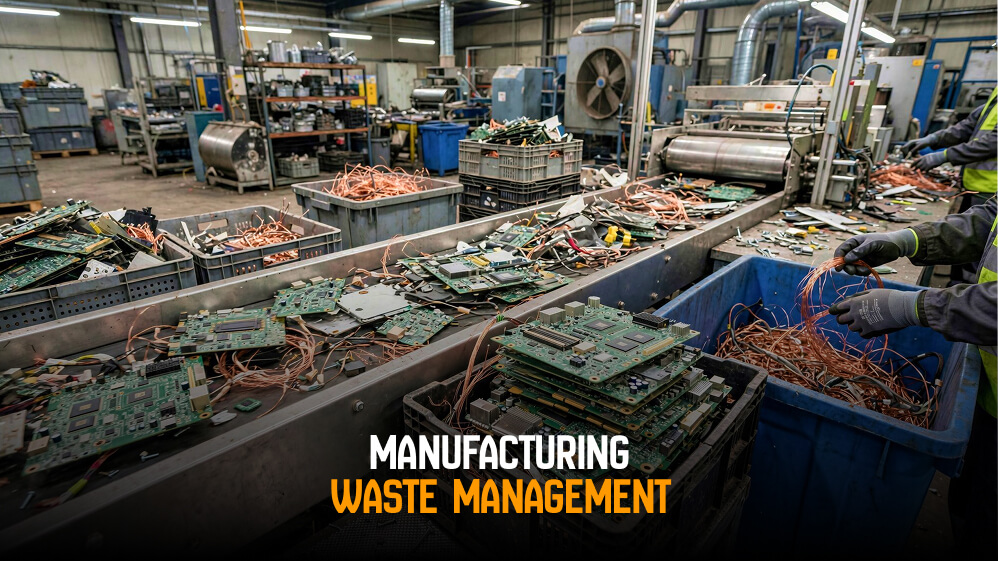
What Is Manufacturing Waste Management: A Quick Answer
Manufacturers in India are responsible for waste management twice.
So, manufacturer waste management is a two-fold process.
It is about managing the waste the plants generate and, under Extended Producer Responsibility (EPR), the waste their products become.
A manufacturer that skips EPR registration, mishandles process waste, or sells scrap to unauthorised buyers violates the Plastic Waste Management Rules 2016.
When a manufacturer violates the waste management procedure, you can raise a complaint to the State Pollution Control Board, the Central Pollution Control Board, and the National Green Tribunal.
Why Is The Violation Of Manufacturer Waste Management Illegal?
Manufacturing waste management is not just about the process.
It is also about the waste management of the final product.
| Violation | Why It Is Illegal | Provision |
|---|---|---|
| Plastic packaging sold without EPR registration | Producers, importers, and brand owners must register and meet EPR targets | Plastic Waste Management Rules 2016, as amended. |
| Electronics sold without e-waste EPR compliance | Producers must meet EPR targets with certificates | E-Waste (Management) Rules 2022 |
| Batteries placed on market without EPR | Producers must meet collection and recycling obligations | Battery Waste Management Rules 2022 |
| Process sludge or solvents dumped | Hazardous process waste needs authorised disposal | HOWM Rules 2016, Rule 4 |
| Scrap sold to unauthorised buyers | Waste goes only to authorised users | HOWM Rules 2016, Rule 4(3) |
Why Does Manufacturing Waste Management Happen?
“MoEF&CC has notified a market-based Extended Producer Responsibility (EPR) framework under the waste management rules with provisions for recycling and reuse, thus promoting a circular economy in respective waste categories.
As per the EPR framework, the producer, importer or brand owner (PIBOs)/ Original Equipment Manufacturers (OEMs) who introduce the product in the market are obligated to ensure its environmentally sound management after the end-of-life of such products.
Along with the EPR targets, the EPR framework also imposes mandatory annual targets for recycling and/ or use of recycled content.”
Press Information Bureau, India.
Manufacturing waste management in India has made a quiet shift.
The law does not now ask the cities to clean up the industrial waste.
Rather, they now ask industries to clean up after themselves.
This is the main thought behind Extended Producer Responsibility, and it is why a manufacturer’s duty does not end at the factory gate.
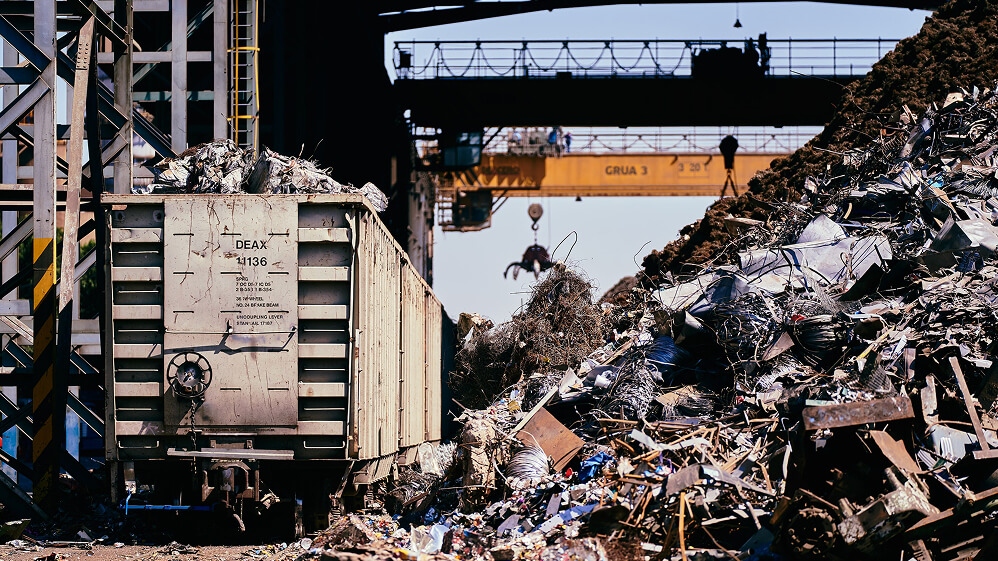
In practice, the trouble starts when scrap, offcuts and process residues leave the plant. Informal buyers, unregistered recyclers and roadside burning often sit at the end of the chain.
When that happens, the manufacturer’s paperwork may look tidy while the waste ends up polluting someone’s neighbourhood.
Governing Law And Your Legal Rights

You have to know the governing laws and key legal provisions to lodge a complaint against manufacturer waste management.
Inside the plant, the Water Act, Air Act and Hazardous and Other Wastes Rules govern effluent, emissions and process waste.
Outside the plant, product-specific rules push responsibility for plastic, electronics and batteries back onto the producer, importer or brand owner.
Inside The Plant, The Waste Management Rules To Follow Are:
- “The Water (Prevention and Control of Pollution) Act, 1974 & Water (Prevention and Control of Pollution) Amendment Act, 2024
- The Air (Prevention and Control of Pollution) Act, 1981
- The Environment (Protection) Act, 1986
- The Commission for Air Quality Management in the National Capital Region and Adjoining Areas Act, 2021.”
Rules To Follow According To Manufactured Products
- “Extended Producer Responsibility (EPR) for Waste Tyre, 2022, on 21.07.2022.
- Battery Waste Management Rules, 2022, on 22.08.2022 and its amendments dated 25.10.2023 and 14.03.2024.
- E-Waste (Management) Rules, 2022, on 02.11.2022 and its amendments dated 30.01.2023 and 24.07.2023.
- Plastic Waste Management Rules, 2016, amended on 27.04.2023 for effective implementation of EPR guidelines.
- Extended Producer Responsibility (EPR) for Used Oil on 18.09.2023.
- EPR Framework for Environment Protection (End-of-Life Vehicles) Rules, 2025 on 06.01.2025.
- Environment (Construction and Demolition) Waste Management Rules, 2025 on 02.04.2025.
- Extended Producer Responsibility for Scrap of Non-Ferrous Metals on 01.07.2025.”
The Role Of CPBC And Consent Order
CPCB runs online EPR portals.
So registration status and targets are something you can check rather than guess.
Conditions attached to a unit’s consent order matter as much as national rules.
They typically fix effluent treatment, emission limits, and waste storage, and a breach of any condition is a breach of the consent itself.
Citizens can request these conditions under RTI and compare them with what they actually see on the ground.
Your Rights As A Citizen
- You have the right to ask the State Board or CPCB to verify a producer’s EPR registration and certificates based on Section 4 of the Right to Information (RTI) Act, 2005.
- The right to report false or missing EPR claims on packaging, electronics, or batteries according to the Environment (Protection) Act, 1986.
- The right to information on consent and authorisation conditions under RTI.
- The right to relief and restoration from the NGT where manufacturing waste damages your area.
“The Tribunal may, by an order, provide relief and compensation to the victims of pollution and other environmental damage arising under the enactments specified in the Schedule I (including accidents occurring while handling any hazardous substance).”
Penalties And Consequences
Violations of the Environment (Protection) Act attract penalties from ₹10,000 to ₹15 lakh.
For EPR defaulters, CPCB can levy environmental compensation on the polluter-pays principle.
Honestly, EPR is where enforcement is thinnest, because compliance is paper-based.
Citizens who read the portals and flag mismatches fill a real gap.
Where To Complain For Manufacturer Waste Management?
| Authority | What it does | Approach when |
|---|---|---|
| State Pollution Control Board (Regional Office) | Grants consent, inspects, samples, and issues directions. | First complaint, and any time you need inspection. |
| CPCB | Sets standards and oversees Boards. | The Board is silent, or the violator is a large unit. |
| MoEFCC and CPGRAMS | Policy, rule-making, and grievance tracking. | Escalation after about 30 days of inaction. |
| Adjudicating officer, Environment (Protection) Act | Hears complaints and imposes penalties. | You want a monetary penalty imposed. |
| National Green Tribunal | Orders stoppage, compensation, and restoration. | Harm is ongoing, or authorities have not acted. |
Step-By-Step Action Plan To Stop The Violation
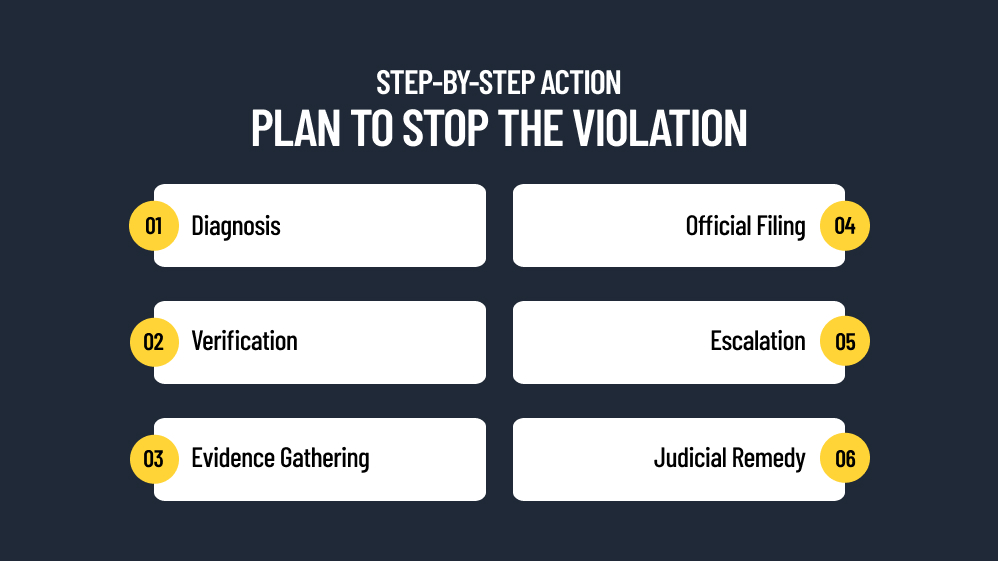
| Phase | Action Item | Target Authorit /System | Key Requirement /Operational Note |
|---|---|---|---|
| Phase 1: Diagnosis | Pin down the product stream | Plastic packaging, electronics, batteries, or plant-level process waste | Each category has its own distinct rule framework. |
| Phase 2: Verification | Check registration | CPCB’s EPR portals or State Pollution Control Board (SPCB) | Confirm both the registration status and compliance records of the producer. |
| Phase 3: Evidence Gathering | Collect proof | Internal documentation / Field records | Photograph unlabelled packaging, scrap yards, or dumped sludge. Keep dated records Do not trespass. |
| Phase 4: Official Filing | File with the State Board and CPCB | State Pollution Control Board (SPCB) & Central Pollution Control Board (CPCB) | Cite the exact rule, attach all gathered proof, and formally request an inspection and an audit of records. |
| Phase 5: Escalation | Escalate to the Ministry | CPGRAMS & Ministry of Environment, Forest and Climate Change (MoEFCC) | Lodge a formal grievance if the State Pollution Control Board remains silent. |
| Phase 6: Judicial Remedy | Seek NGT relief | National Green Tribunal (NGT) | File a legal petition within six months of the cause of action to demand a stoppage, financial compensation, and environmental restoration. |
However, if there is a fire at chemical stores or scrap, you must call 112 immediately.
What Counts As Strong Evidence
- Dated photos and videos with a visible location marker.
- Vehicle numbers, loading times and the name of the unit.
- Copies of complaints, acknowledgements and replies.
- RTI responses showing consent, authorisation or inspection reports.
Mistakes To Avoid While Making Complaints Against A Waste Manufacturer

You must not confuse plant-level waste duties with product-level EPR duties.
Also, you must not assume that a recycling logo or sustainability claim will prove compliance.
Moreover, if the issue is about brand-level EPR, you must not keep the complaints limited only to the local board.
Green claims are cheap, and compliance is documented.
Check the registration, read the certificate, and complain when the two do not match.
A manufacturer that has to explain a mismatch to CPCB usually fixes it quickly. Remember the worker angle too.
Manufacturing waste often exposes workers first, through fumes, solvents, and unsafe storage.
So a complaint that also describes conditions on the shop floor gives inspectors more to act on.
Manufacturer Waste Management: Frequently Asked Questions (FAQs)
Here are the frequently asked questions and answers about manufacturer waste management.
1. What Is Extended Producer Responsibility?
Extended Producer Responsibility (EPR) is an environmental policy.
The policy makes producers, importers, and brand owners responsible for collecting and recycling the waste their products create instead of local governments.
2. Can A Consumer Complain About A Brand?
Yes, a consumer can complain about a brand for violations of waste management.
You can highlight issues such as missing registration or false claims to the State Board or the Central Pollution Control Board.
Also, you can make the complaint directly about a product or service or the overall environmental violation.
3. Do Small Manufacturers Need EPR Registration?
The requirements for small manufacturers needing EPR registration depend on the product category and thresholds in each rule.
Also, the position of the business in a specific supply chain will determine the requirements.
Furthermore, the requirements depend on the specific waste streams involved.
4. Does An Importer Count As A Producer?
Yes, the Plastic Waste Management Rules, 2016 (specifically strengthened by the 2022 EPR Amendment Guidelines) count an importer as a producer under the broader umbrella.
Furthermore, Rule 6 of Schedule II states that all importers must register on the Centralized EPR Portal developed by the Central Pollution Control Board (CPCB).
5. Where Do I Check Rule Texts?
You can check the Ministry of Environment, Forest and Climate Change (MoEFCC) portal, the Central Pollution Control Board (CPCB) website, and the portals of State Pollution Control Boards.
Furthermore, you must read the Hazardous and Other Wastes (Management and Transboundary Movement) Rules, 2016 (and its latest amendments).
Other rules to know about are the Solid Waste Management Rules, 2026, Plastic Waste / Battery Waste / Used Oil EPR Rules, and E-Waste (Management) Rules, 2022 (with 2023/2024 revisions).
6. Can Scrap From Manufacturing Ever Be Sold?
Yes, you can sell the scrap from manufacturing to authorized users or recyclers with proper records.
However, if the waste falls under hazardous waste, e-waste, used oil, or waste batteries, you cannot sell them arbitrarily.
You have to sell the waste to the Central Pollution Control Board (CPCB) exclusively.
Yes, to authorised users or recyclers, with proper records. Selling to unregistered buyers is the problem.
7. What If The Brand Is National But The Plant Is Local?
Complain to the State Board about the plant and to CPCB about brand-level EPR compliance.
You have to leverage the national corporate structure because national brands are sensitive about the damage to public relations and supply chain disruptions.
Downloadable Complaint Letter Template
Fill in the bracketed fields, attach evidence, and submit with a stamped acknowledgement.
To: The Member Secretary, [State] Pollution Control Board, [Address]
Copy to: The Regional Officer, [Region], Central Pollution Control Board, Delhi
Subject: Complaint against illegal manufacturing waste management by [Factory name], [Address]
Respected Sir/Madam,
I wish to report that [Factory name], located at [Address], is engaged in mishandling process waste, selling scrap to unauthorised buyers, or evading Extended Producer Responsibility.
On [dates and times], I observed [describe what you saw]. Dated photographs, video, and a location pin are attached.
This conduct appears to violate the Hazardous and Other Wastes (Management and Transboundary Movement) Rules, 2016, the Plastic Waste Management Rules, 2016, the E-Waste (Management) Rules, 2022, and the Environment (Protection) Act, 1986.
I request (1) an urgent inspection and, where relevant, sampling; (2) verification of the unit’s consent and authorisation; (3) action under the applicable laws; and (4) an acknowledgement and an action taken report.
Yours sincerely,
[Name] | [Address] | [Phone] | [Email] | [Date]
Enclosures: photographs, video, location pin, vehicle numbers, earlier correspondence.