




What Are Practical Electricity Units On Your Electricity Bill? How To Get These Units And More
Quick Answer
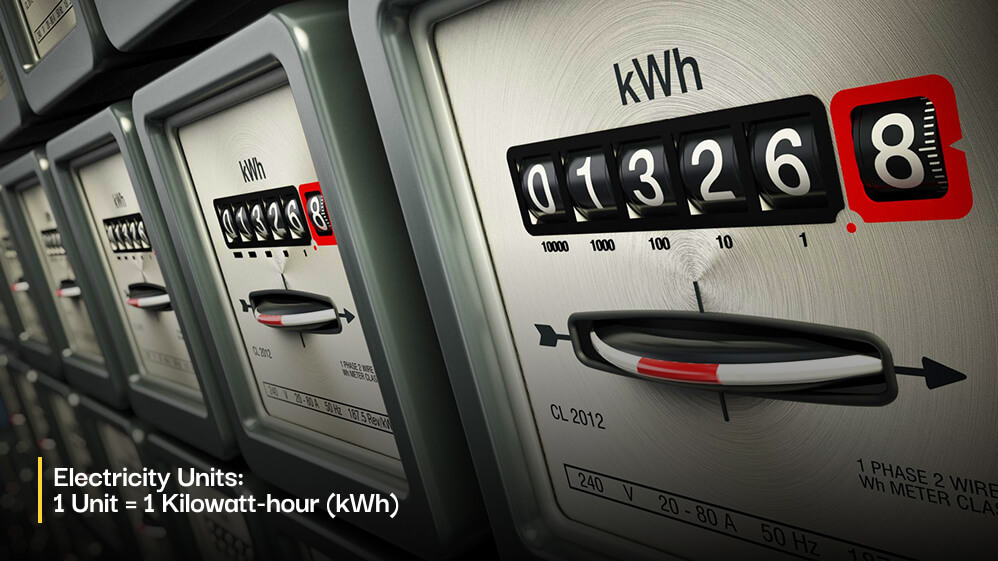
A practical utility unit on your electricity bill is the kilowatt-hour (kWh).
So, one unit is equal to a 1,000-watt appliance running for one hour.
Your electricity meter will keep adding up the units continuously.
When you check the electricity bill, you will find that the units used are multiplied by your state’s tariff.
Also, the number of practical utility units on your bill will depend on the appliances.
For example, when a 60-watt ceiling fan runs for around 16 to 17 hours a day, it roughly consumes 1 unit.
On the other hand, an air conditioner of 1,500W consumes 1 to 1.5 units in 40 minutes to 1 hour.
What Does One Unit Mean On Your Electricity Bill?
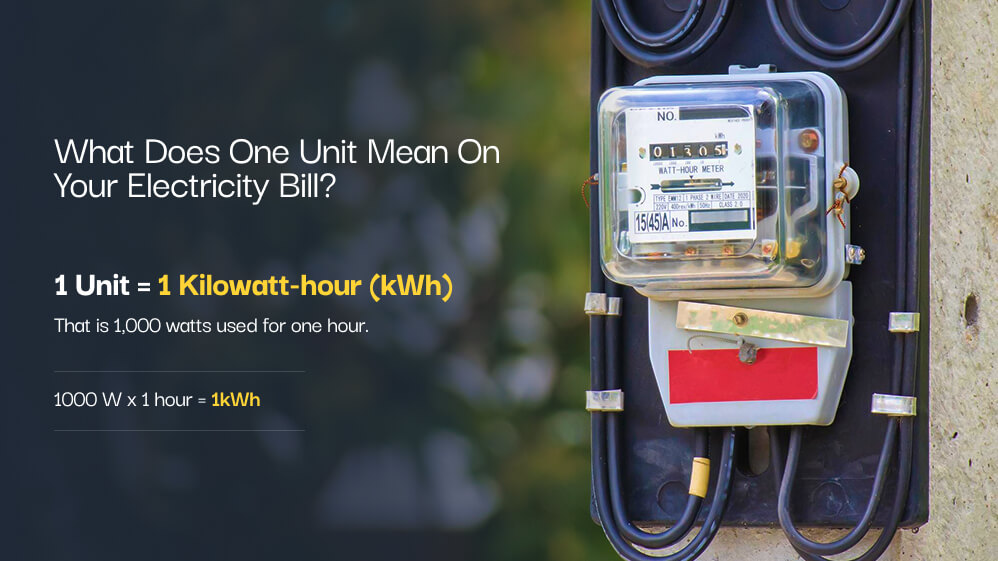
Your electricity bill measures energy and not power or kilowatts.
Power, measured in kilowatts, means how fast an appliance draws electricity.
Energy, on the other hand, measured in kilowatt-hours, means how much it drew over time.
Scientists use the joule as the standard SI unit of energy, but one kWh equals 3.6 million joules.
So, the kWh became the practical unit that electricity boards bill in.
How Do You Convert Watts And Hours Into Units?
Units = (Watts x Hours)/1000.
A 100 W bulb for 10 hours, a 2 kW geyser for 30 minutes, and a 1 kW iron for an hour each use exactly one unit.
Here are typical run-times for different appliances.
However, the run-times can change based on the actual wattage mentioned in the rating plate for each appliance.
| Appliance | Typical power | Run time for 1 unit |
|---|---|---|
| LED bulb | 10 W | About 100 hours |
| Ceiling fan | 60 W | About 17-18 hours |
| Television | 100 W | 10 hours |
| Electric iron | 1,000 W | 1 hour |
| Water geyser | 2,000 W | 30 minutes |
| 1.5-ton split AC (compressor on) | About 1,500 W | About 40 minutes to 1 hour |
How Does Your Meter Turn Units Into A Bill?

The register of the meter adds the units, or kWh, without resetting.
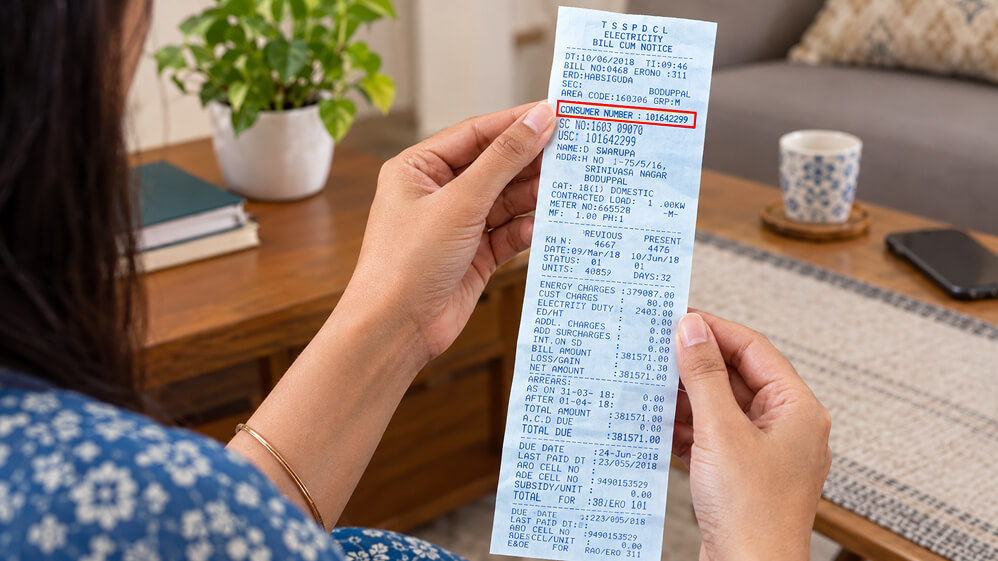
The units billed are the amount you will get after subtracting the previous reading from the current reading.
So, the units billed for this cycle = Current Reading – Previous Reading.
Then, the units are multiplied by the meter’s multiplying factor if one is printed on your bill.
Smart meters record the same kWh digitally.
Why Does The Rate Per Electricity Unit Change As You Consume More Electricity?
The rate per electricity bill per unit changes as you consume more electricity because your State Electricity Regulatory Commission fixes the tariff based on slabs.
Higher slabs mean higher charges per electricity unit.
Also, once the units are multiplied by the slab rate, you will get the total energy charge.
The bill then adds a fixed or demand charge, electricity duty, and any fuel or power-purchase adjustment.
That is why identical consumption costs different amounts across states, and why units just past a slab boundary hurt the most.
How To Verify The Practical Electricity Units On Your Electricity Bill?
Here’s a quick five-minute checklist for how to verify practical electricity units.
| Step | What to do | What to look for |
|---|---|---|
| 1 | Photograph the meter display today. | The kWh register, not the kW or maximum demand screen. |
| 2 | Find the previous and current readings on your bill. | Check whether the current reading is marked actual, estimated, or average. |
| 3 | Subtract previous from current. | Multiply by the multiplying factor, if printed. |
| 4 | Compare with the “units consumed” line. | Any gap between your result and the billed units. |
| 5 | If they do not match, complain and ask for meter testing. | Keep the complaint number and your photos. |
Note: Always compare the kWh register, never the kW figure, when disputing a bill.
A reading of 1.03 kW on a display is a momentary load, not one unit consumed.
Practical Electricity Units: Frequently Asked Questions And Answers (FAQs)
Here are the frequently asked questions and answers about practical electricity units.
1. Is One Unit Of Electricity The Same As One kWh?
Yes, one unit of electricity is one kilowatt-hour, which is 1,000 watt-hours or 3.6 million joules.
Every distribution company in India uses this definition.
However, the price per unit differs by state and category.
Some utilities bill larger commercial and industrial consumers in kVAh, which also counts reactive power.
So check the unit printed beside your consumption on the bill.
2. What Is The Difference Between kW And kWh On My Meter?
Kilowatt, or kW, is the unit used to measure the instantaneous load, the rate at which you are drawing power right now.
On the other hand, kWh is cumulative energy, the quantity you pay for.
Digital and smart meters cycle through screens showing both kW and kWh.
However, only the kWh register is subtracted to get billed units.
3. How Many Units Do A Fridge, An AC And A Geyser Use?
A 300-litre refrigerator typically uses 200 to 300 units a year, roughly 0.5 to 0.8 units a day, because its compressor cycles on and off.
BEE star labels on refrigerators show annual consumption, which helps you compare models.
A 1.5-ton AC can draw about 1.5 kW while the compressor runs.
So, it can use up to 12 units over eight continuous hours, though inverter models cycle lower.
Also, a 2 kW geyser uses one unit per 30 minutes.
4. Why Did My Units Rise When My Usage Was The Same?
The number of units consumed can rise even with the same usage if there is a longer billing cycle, for example, 35 days instead of 30.
Furthermore, there can be seasonal cooling load, or a previous bill based on an estimated or average reading followed by an actual reading that catches up.
Vampire power draw and faulty meters are other reasons why your units can rise even when the usage feels the same.
However, check the reading type and the billing period on both bills before assuming the meter is wrong.
5. Can I Test Whether My Meter Is Recording Correctly?
Yes, you can test whether your meter is recording correctly or not.
You can do a simple load test by following this step-by-step process.
- Switch off everything.
- Then run one appliance whose load you know.
- For example, you can run a 1 kW heater for one hour.
- Then, check whether the kWh register moves by about one unit.
Thus, you can do the test by switching on the appliances one by one.
If you notice a mismatch in the meter reading continuously, you can lodge a complaint.
The Electricity (Rights of Consumers) Rules, 2020 provide for meter testing within 30 days of a complaint, including a third-party testing option.
Also, the fee rules depend on your state regulator.
6. Are Units On A Smart Or Prepaid Meter Different?
No, the units on a smart or prepaid meter are not different from regular meters.
A smart meter still measures kWh.
So, the difference is that you can see consumption near real time through an app or portal, and prepaid balance is deducted at your tariff rate for every unit.
Some tariffs charge different rates at different hours of the day.
The Rules say new connections get a smart prepayment or prepayment meter, with exceptions approved by the state commission.
7. How Are Units Counted If I Have Rooftop Solar?
Net-metered homes see two figures: units imported from the grid and units exported to it.
The bill typically charges you for imports minus exports, and surplus handling varies by state policy.
Always check both registers, since an error in the export reading reduces your credit just as an import error raises your charge.
8. Where Do I Escalate A Dispute Over Billed Units?
Start with your distribution company’s consumer care and note the complaint number.
If it is not resolved, approach the Consumer Grievance Redressal Forum of your distribution company, and then the Electricity Ombudsman of your state.
Attach your meter photographs, the bill, and your reading calculation from the verification table above.