
LPG Shortage In India In 2026: What Really Happened, What Changed, And Why It Isn’t Over?
What Is The Crisis Of LPG Shortage In India? A Quick Answer
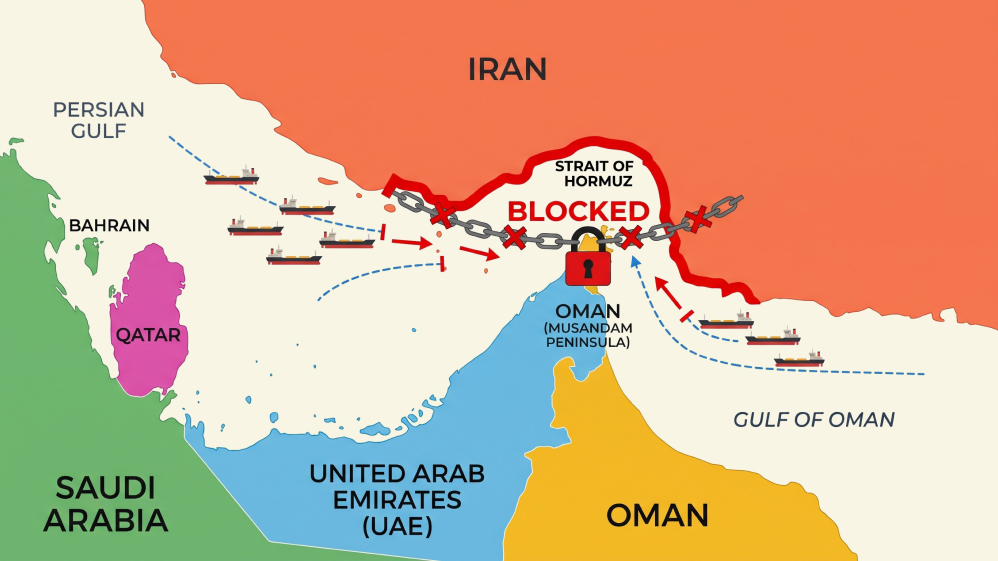
The LPG shortage in India began in March 2026 when the shipping disruption happened in the Strait of Hormuz due to the Iran War.
It is the route for most of India’s imported cooking gas, and thanks to the political unrest, imports fell by more than half in two months.
Supply has since stabilized. However, the crisis has exposed India’s cooking gas vulnerability.
In March 2026, the government of India said that there was no LPG shortage in India.
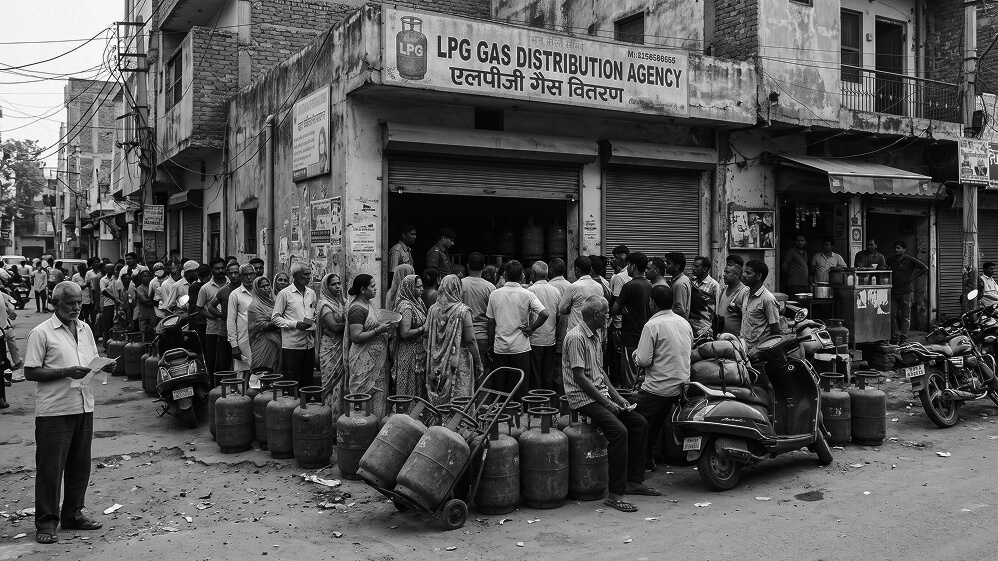
However, people from Chennai to Kolkata were queuing with empty cylinders to book LPG.
It has been eight months since the incident, and the minister, Hardeep Puri, in a recent interview with ANI, said that the global oil supply risks still continue.
Again, we can see that the crisis, which is not very on your face right now like in March, persists.
The November 20 Business Today report rightly points out why the crisis is not over yet.
“India’s broader energy dependence makes the problem more complicated. The country imports around 40% of its overall energy requirements, including approximately 90% of its crude oil and 50% of its natural gas.
The Strait of Hormuz remains particularly important for LPG supplies. According to the IEA, LPG passing through the strategic waterway accounts for half of the cylinders used for residential cooking in India.
The disruption to shipping during the 2026 conflict demonstrated how quickly geopolitical tensions can translate into domestic fuel shortages.”
So, what is the real scenario? The crisis, the optics around it, or the desperate measures to brush it under the carpet?
Let’s discuss.
What Triggered The LPG Shortage In India?
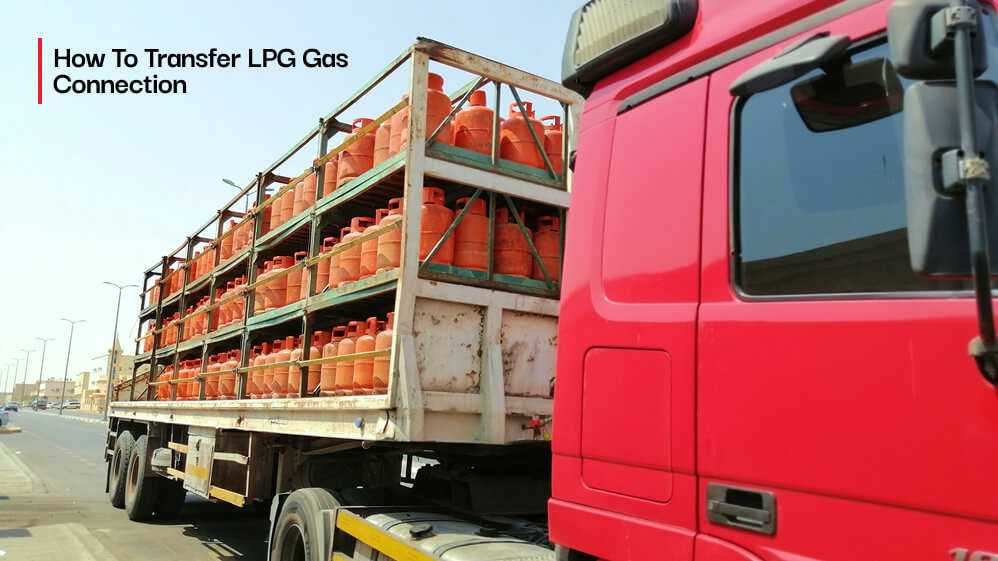
India is the second-largest LPG importer in the world.
Domestic production was about 450,000 barrels a day in 2025, and it covered roughly 40% of the demand (Source: Business Today).
The rest of the LPG supply arrives by ship.
Petroleum Minister Hardeep Singh Puri says around 90% of those imports came from the Gulf, with Qatar, the UAE and Saudi Arabia leading.
So, when Iran closed the Strait of Hormuz, protests over LPG shortages erupted across India.
The International Energy Agency (IEA) estimated the fall in imports by around 50% in the first two months.
The Timeline Of The LPG Crisis In India
| Date (2026) | Event |
|---|---|
| 7 Mar | Domestic cylinder price is up from ₹60 to ₹913 in Delhi. Commercial cylinder price rises to ₹115. |
| 10 Mar | Natural Gas (Supply Regulation) Order issued. Booking gap extended from 21 to 25 days and commercial supply curtailed. |
| 10-13 Mar | Restaurants warn of closure. Home delivery delays of 2 to 8 days. Congress workers protest in Delhi. |
| 16 Mar | Households with piped gas barred from subsidised LPG |
| 26 Mar | Ministry declares “no LPG shortage” Refinery output ramped up by 40%. |
| 7 Jun | Domestic cylinder up ₹29 to ₹942. Ujjwala subsidised refills cut from 9 to 4. |
| 4 Nov | Iran says Indian ships exempt for Hormuz transit. |
| 19 Nov | Hardeep Puri discloses to ANI that LPG stocks fell to 25 days at one point. |
How Bad Was The Situation Of LPG Shortage? What Do The Numbers Say?
Panic spread quickly in India as Crude oil and natural gas stocks each covered about 60 days in the worst-case scenario.
At the same time, the LPG stocks could cover 25 days. Also, LPG bookings shot up as households tried to beat the rationing.
| Metric | Figure |
|---|---|
| LPG stock cover at the low point | 25 days (vs 60 days for crude and gas) |
| Daily cylinder bookings | 52 lakh before the conflict, 92 lakh during it |
| Domestic LPG output | 35,000 to 55,000 tonnes a day (about +57%) (Source: etvbharat.com) |
| LPG imports, first two months | Down by more than 50% |
| Refinery output jump in March | About 180,000 barrels a day |
| Home delivery delays | 2 to 8 days after booking |
You need to note one more thing along with the number mentioned in the table above.
The ministry’s 26 March statement put daily output at 50,000 tonnes against a requirement near 80,000, which implies a real gap even then.
So, even by the calculation of simple arithmetic, the “No Shortage” headline is a misfit.
Restaurants And Dhabas Took The First Hit
As the LPG shortage in India started, households got priority. That was even more problematic for the commercial users.
Restaurant bodies in Maharashtra, Karnataka and West Bengal warned of shutdowns within days.
In a March 2026 report, the Times of India highlights how the prominent names in the industry voiced their concerns and how they were planning to cope with it.
“We were advised to manage with restricted supply of LPG cylinders. We are taking all measures to ensure minimisation in LPG usage.”
- Kamal Reza, General Manager (Development), The Lalit Suri Hospitality Group.
“We have been informed by the authorities about the scarcity of LPG in the coming days.
We reviewed the situation and are ensuring control measures. We have stock for a few days and hope the crisis is resolved at the earliest.”
- Anjan Chatterjee, Chairman, Speciality Restaurants Ltd (Mainland China, Oh! Calcutta).
The dealers also suspected the squeeze would push commercial users toward illegally bought subsidised cylinders, and that would be a dangerous practice for the market as well as from the LPG safety perspective.
In Bengaluru also, the state hotels association said more than 20% experienced the impact and many cut menus, since switching to induction is hard without enough sanctioned electrical load.
Moreover, hospitals and schools were promised 100% of requirements, and restaurants and hotels were capped at 90%.
Government Claims Vs. Kitchen Reality
On 26 March, the ministry called shortage reports a deliberate misinformation campaign.
On 19 November, Puri said LPG stocks had touched 25 days, adding that “there hasn’t been a dry-out anywhere.”
Let me tell you how I have read this remark about retail fuel outlets.
The pipeline never ran dry. However, the rationing happened through booking gaps, delays, and price. Rationing by another name is still rationing.
Again, history offers a nudge, as historians often link the 1990 Gulf War oil shock to the balance-of-payments crisis that forced India’s 1991 reforms.
So, Hormuz has haunted Delhi before.
Also, India never reached Mad Max territory, but bookings nearly doubling in weeks shows how fast confidence evaporates before the gas does.
Is The Worst Phase Of The LPG Shortage Over? What Has Changed Since March
Yes, there is a momentary sigh of relief for existing consumers and anyone looking for a new LPG connection.
Though the pressure has eased for three seasons, a permanent resolution is yet out of reach.
Supply Levers That Worked
Puri says Indian oil companies managed to move cargoes through the strait despite restrictions imposed by Iran and the United States, even as Red Sea tensions added to the worry.
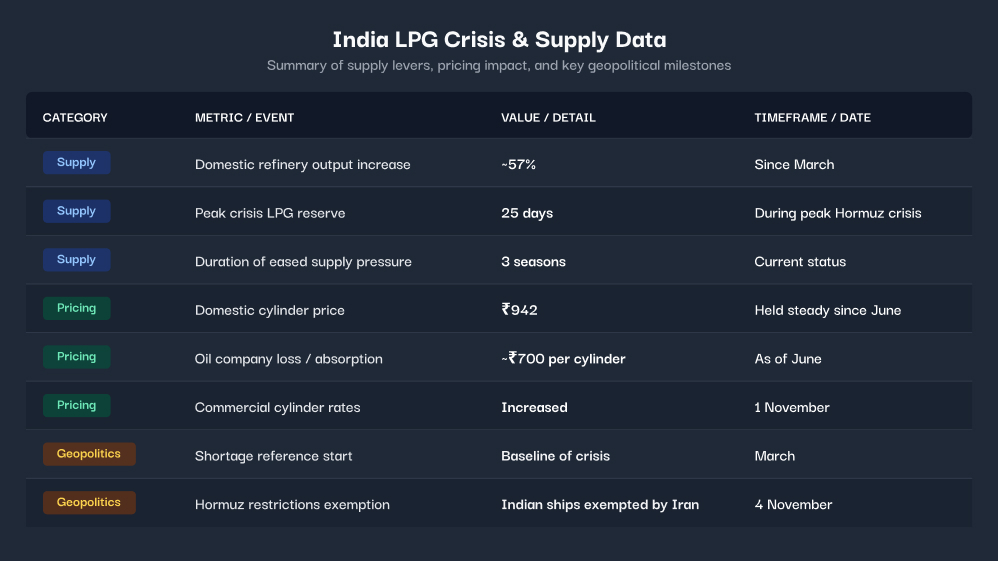
Also, domestic refineries lifted output by about 57%
And Iran’s 4 November announcement exempting Indian ships from its Hormuz restrictions removes the most acute risk for now.
Why Relief Is Fragile
An exemption is a diplomatic favour, not a supply contract, and it can be withdrawn.
Domestic cylinder prices have held at ₹942 since June.
However, commercial rates went up again on 1 November, and oil companies were absorbing roughly ₹700 a cylinder as of June.
Also, there are a lot of questions about the reserve, with Hardeep Puri recently disclosing that India only had a reserve of 25 days of LPG gas during the peak crisis in the Strait of Hormuz.
Who Paid the Price? Cylinder Costs In 2026
Delhi households saw two hikes totalling ₹89 per 14.2 kg cylinder, and commercial users bore far more.
| Cylinder (Delhi) | Price movement |
|---|---|
| Domestic 14.2 kg | ₹853 to ₹913 (7 March) to ₹942 (7 June) Unchanged on 1 Nov (Source: PIB) |
| Ujjwala effective price | ₹613 in March₹642 After the June Hike (Source: deccanchronicle.com) |
| Ujjwala subsidised refills | 9 a year cut to 4 (₹2,700 to ₹1,200 benefit) (Source: Business Today). |
| Commercial 19 kg | ₹1,883 (7 March)Reported ₹3,071.50 After a ₹993 Hike₹2,820 from 1 November (Source: Openthemagazine.com). |
The Subsidy Squeeze
The ministry says supplying a cylinder costs over ₹1,600, with oil companies absorbing about ₹700, and notes Indian prices sit below Pakistan (₹1,046) and Nepal (₹1,207).
However, that is a fair point and a cold comfort.
Moreover, cutting subsidised Ujjwala refills from nine to four hits the households least able to absorb it, and the obvious risk is a drift back to firewood.
The PNG Pivot: Smart Policy Or Forced Migration?
The crisis handed the government a lever it had wanted for years.
A 16 March order barred households with piped natural gas (PNG) from keeping or refilling subsidised domestic LPG.
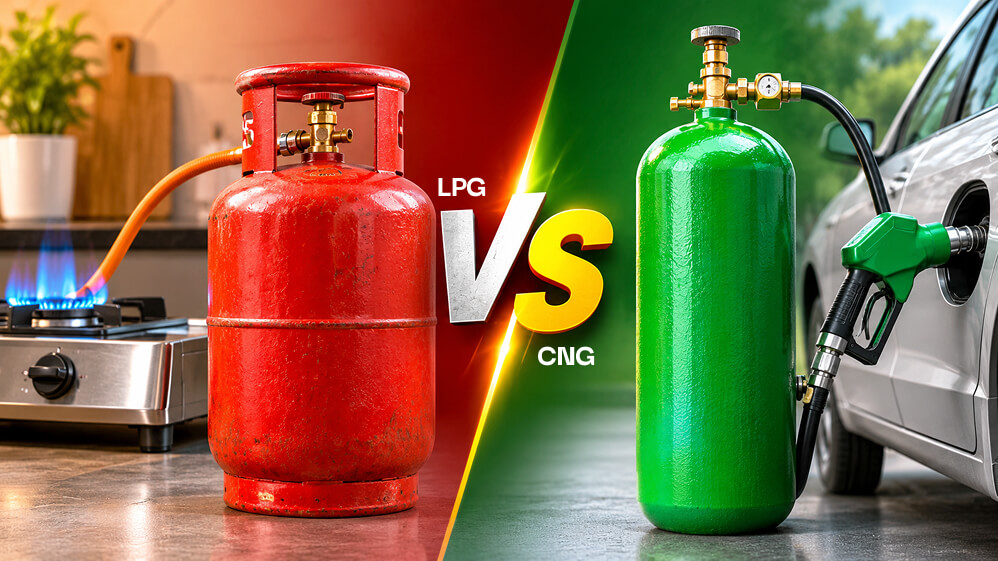
PNG, like CNG, is compressed natural gas, delivered to households or societies in a pipeline.
India had about 1.65 crore PNG connections at the end of January, with only 1.03 crore actively using gas.
Furthermore, by August, the count was 1.74 crore, and ThePrint reported LPG consumption down 16%.
Moreover, city gas companies sweetened the shift as IGL offered ₹500 of free gas for early registrants of PNG.
Where The Pivot Struggles
The target is to achieve over 12 crore of PNG connections by 2034, and that is roughly eight to nine times today’s base.
Furthermore, connection charges run ₹5,000 to ₹9,000, and nearly 60 lakh connections, about 40%, are inactive if you research the economics of PNG.
There is also an awkward truth that India imports about 50% of its natural gas.
So, swapping one imported molecule for another is diversification. It does not end the vulnerability.
What The IEA Says Comes Next
The IEA’s World Energy Outlook 2026 projects LPG demand rising by almost 400,000 barrels a day by 2035 against under 100,000 barrels of new domestic supply.
So, this will push imports toward 1 million barrels a day.
However, with faster PNG and electric cooking, that falls below 750,000, as a Business Today report suggests.
What Households Can Do Now
You must only book your LPG cylinder through an official oil company and adhere to the delivery duration norms.
So, don’t stockpile, as panic booking will encourage black markets and create more crisis.
Buying from black-market sellers is not only expensive but also unsafe.
Also, if you are a Ujjwala beneficiary, you should track four subsidised refills for the year.
Moreover, if piped gas is available in your area, compare the connection cost against your annual cylinder spend.
LPG Shortage In India: Frequently Asked Questions (FAQs)
Here are the frequently asked questions and answers about the LPG shortage in India.
Is There Still An LPG Shortage In India?
No nationwide shortage is currently reported.
Hardeep Puri says no retail outlet ran dry, and Iran said on 4 November that Indian ships may cross Hormuz.
However, Puri has recently revealed that stocks dipped to 25 days at one point. So, the system is vulnerable, and a crisis will happen if disruptions strike again.
Why Did LPG Bookings Nearly Double?
LPG bookings nearly doubled as the fear of rationing drove households to book early.
Daily bookings rose from 52 lakh to 92 lakh during the disruption.
However, the government responded with a longer 25-day gap between refills, intended to stop hoarding and black marketing.
What Is The Gap Between LPG Refills Now?
Urban consumers face a 25-day minimum between bookings, up from 21 days.
Also, some reports mention 45 days for rural areas, but the ministry denied a 45-day change for Ujjwala connections. So, confirm the gap with your distributor.
Have Domestic LPG Prices Gone Up Again?
No, the domestic LPG prices have not gone up again as of November 2026.
The Delhi price of a 14.2 kg cylinder stayed at ₹942 on 1 November, while commercial LPG rose ₹10 to ₹2,820.
Also, monthly revisions depend on international prices and the rupee. So, check the oil company’s website.
Is LPG Being Banned In India?
No, LPG is not getting banned in India.
The order on 16th March 2026 asks households with a PNG connection to surrender subsidised domestic LPG.
However, households without piped gas continue to receive cylinders, and the ministry says supply is prioritised for them.